Personalization has always been positioned as the ultimate goal in marketing. Brands have spent years refining strategies to move from mass communication to more targeted, relevant messaging. Emails became personalized, product recommendations improved, and even landing pages began adapting to user behavior.
Yet one major element remained largely unchanged—visual content.
Images and videos, despite being the most powerful drivers of engagement, were still created in fixed formats. Even the most advanced campaigns relied on a limited number of creative variations, distributed across audience segments rather than individuals.
That limitation is now being challenged.
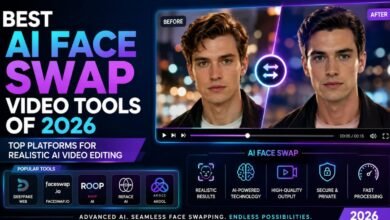
With the rise of image-based Face Swap AI, brands are beginning to unlock a new layer of personalization—one that goes beyond messaging and moves into identity. Platforms like Higgsfield are enabling this shift by allowing creators and marketers to dynamically adapt who appears in a visual, not just what it says.
The Personalization Gap: Why Visual Content Lagged Behind
For years, marketing teams operated within a predictable framework. Audiences were divided into segments, creatives were produced in a handful of variations, and those variations were distributed accordingly.
The system worked, but only to a certain extent.
Consumers increasingly expect personalized experiences. However, most personalization strategies still operate at a group level rather than an individual level. The reason is simple: producing unique visual content for each user was not scalable.
Creating personalized visuals traditionally required:
- Multiple photoshoots
- Extensive design resources
- High production costs
- Long turnaround times
This made true one-to-one visual personalization impractical for most brands.
As a result, there was a clear gap between what marketing aimed to achieve and what was actually possible.
From Segments to Individuals: A Fundamental Shift
Face Swap AI changes how brands approach this problem. Instead of creating multiple versions of a visual for different audience groups, marketers can now dynamically adapt visuals at the individual level.
This introduces a new way of thinking.
Instead of designing content for “a segment,” brands can design for a single person.
This shift enables a completely different experience. Visuals can now reflect:
- The user’s demographic profile
- Their preferences and behavior
- Contextual relevance based on their journey
Rather than presenting a generic message, the content begins to feel personal in a much deeper sense.
Platforms like Higgsfield make this possible by allowing a consistent identity to be applied across multiple visual assets, creating scalable personalization without increasing production complexity.
How Face Swap Fits into Modern Marketing Workflows
Face Swap is not just a creative tool. It is becoming part of a broader AI-driven content system where data, automation, and visuals work together.
The process can be understood in four key stages.
First, user data is collected. This includes demographic information, behavioral signals, and interaction history.
Second, content engines generate variations in messaging, offers, and creative frameworks.
Third, the visual layer is applied. This is where tools like Higgsfield come in, enabling brands to adapt visuals by swapping faces within pre-designed assets while maintaining consistency.
If you want to understand how this works in a real-world workflow, exploring how Face Swap is applied in content systems shows how identity can be scaled across visuals without rebuilding them from scratch.
Finally, the content is delivered in real time across channels such as ads, websites, emails, and apps.
The result is a seamless experience where visuals feel tailored to the individual without requiring manual production for each variation.
Why This Shift Is Happening Now
The timing of this transformation is not accidental. Several factors are converging to make identity-level personalization both possible and necessary.
One of the most important drivers is changing consumer expectations. People are no longer satisfied with generic content. They expect interactions to feel relevant, timely, and personal. When that expectation is not met, engagement drops.
Another key factor is the advancement of AI content generation. What once required significant time and resources can now be achieved in seconds. Visual assets can be created, adapted, and deployed at scale.
Industry data reflects this shift clearly. The rapid growth of AI-driven video and visual content is reshaping how marketing operates. For a broader perspective on how this transformation is unfolding, insights from AI video statistics for 2026 highlight how production speed, cost efficiency, and adoption rates are accelerating across industries.
Speed has also become a defining factor. Campaigns are no longer static. They evolve constantly based on user behavior and platform trends. Face Swap enables visual content to keep up with this pace by allowing instant adaptation without restarting the creative process.
From Personalization to Identity-Level Relevance
The most significant change introduced by Face Swap AI is not just efficiency—it is depth.
Traditional personalization focused on elements like names, product recommendations, and tailored messaging. While effective, these approaches operate at a surface level.
Identity-level personalization goes further.
It integrates the user into the visual narrative itself. Instead of simply receiving a message, the user sees a version of themselves reflected in the content.
This creates a stronger emotional connection. People are more likely to engage with content that feels directly relevant to them, not just logically but visually.
Higgsfield supports this transition by enabling consistent identity representation across multiple assets, ensuring that personalization does not compromise brand coherence.
Real-World Applications Across Industries
The impact of this shift can be seen across multiple sectors.
In e-commerce, brands can create visuals where customers see themselves wearing products, making the experience more immersive and persuasive.
In fitness and wellness, personalized visuals can be used to show progress, motivation, and outcomes, helping users stay engaged.
In travel and hospitality, campaigns can present destinations through visuals that feel personally relevant, enhancing aspiration and interest.
In financial services, abstract concepts can be made more relatable by aligning visuals with user profiles and goals.
Across all these use cases, the underlying principle remains the same: making content feel closer to the individual.
Many teams using Higgsfield integrate this approach into their workflows to produce content that is both scalable and contextually relevant.
The Economics of Scalable Personalization
One of the biggest barriers to personalization has always been cost. Producing multiple variations of visual content required significant investment, making it difficult to scale.
AI is changing this equation.
By reusing base assets and applying transformations through tools like Higgsfield, brands can generate multiple variations without repeating the entire production process.
This leads to several advantages:
- Reduced production costs
- Faster turnaround times
- Increased output volume
- More efficient use of creative resources
What was once expensive and time-consuming is now becoming a standard part of modern marketing workflows.
Challenges and Considerations
Despite its potential, this approach comes with important challenges that brands need to address carefully.
Privacy is one of the biggest concerns. As personalization becomes more advanced, users are becoming more aware of how their data is used. Transparency is essential to maintain trust.
Authenticity is another factor. Over-personalization can sometimes feel intrusive if not handled thoughtfully. Brands need to balance relevance with comfort.
Ethical considerations also play a role. The use of identity in visuals raises questions about consent, representation, and bias. These issues are likely to become more prominent as the technology evolves.
Using tools like Higgsfield responsibly ensures that the benefits of personalization are realized without compromising user trust.
The Future of Marketing: Infinite Creative Possibilities
Looking ahead, Face Swap AI represents just the beginning of a broader transformation.
Marketing is moving toward systems where content is no longer static but continuously generated and adapted. Visuals will become more dynamic, campaigns more responsive, and personalization more precise.
Future developments may include:
- Fully dynamic video content tailored to individual users
- AI-generated personas designed for specific audiences
- Real-time campaign optimization based on user interaction
- Predictive content generation based on behavioral signals
Higgsfield is already part of this evolution, enabling creators to experiment with scalable visual storytelling without traditional limitations.
Final Thoughts
For years, marketers have focused on delivering the right message to the right person at the right time.
Face Swap AI introduces a new dimension to this idea—the right visual identity.
It allows brands to move beyond communication and into representation. Instead of simply speaking to audiences, they can reflect them within the content itself.
This shift has the potential to redefine how marketing works. It can deepen engagement, improve conversion rates, and create more meaningful user experiences.
At the same time, it requires careful implementation. Transparency, ethics, and user trust must remain central to how these tools are used.
As the digital landscape continues to evolve, one thing is clear. Personalization is no longer just about what users see. It is about how closely that content reflects who they are.