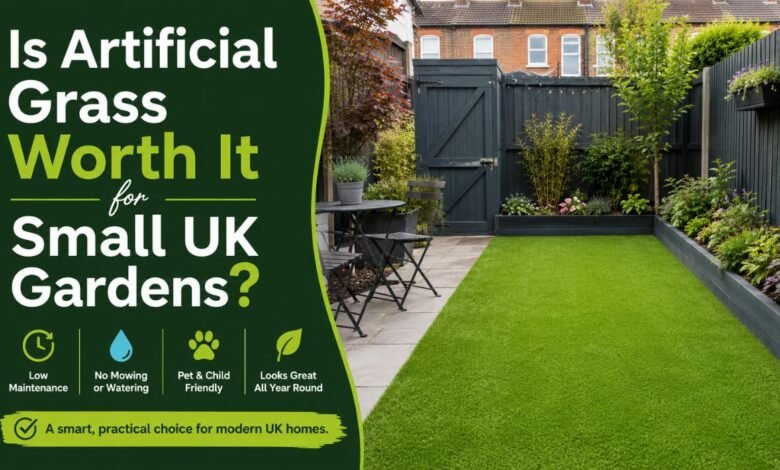
Small gardens can be some of the most rewarding outdoor spaces to own, but they can also be some of the hardest to maintain well. When every square metre matters, the lawn has to do more than simply look green. It often needs to make the space feel bigger, stay tidy in wet weather, work for children or pets, and avoid becoming another long weekend job.
That is exactly why more homeowners are considering artificial grass for small gardens. In a compact space, a lawn that stays neat all year and does not turn muddy after a rainy week can feel like a major upgrade. But artificial grass is still an investment, and many buyers want to know whether it is actually worth the cost once you look beyond the sales pitch.
The honest answer is that it depends on how you use your garden, what problems you are trying to solve, and what kind of outdoor space you want long term. For many small UK gardens, artificial grass can make excellent sense. For others, it may not be the best fit.
If you are weighing up the pros and cons, here is what really matters before deciding.
Why Small Gardens Create Different Lawn Problems
A small lawn does not just behave like a large lawn on a smaller scale. It often takes more concentrated wear, gets less flexibility in layout, and has less room to hide any problem areas.
In a compact garden, the same section of lawn may be used constantly for:
- walking routes to seating areas
- children’s play
- pets going outside
- furniture placement
- general family use
This concentrated traffic is one of the main reasons real grass often struggles in smaller spaces. Bare patches show quickly, damp corners stay damp, and muddy wear near doors can make the entire garden feel untidy. In shaded or enclosed gardens, it can become even harder to keep natural grass looking healthy without ongoing repair and maintenance.
That is why small gardens often lead homeowners to ask not just what looks best, but what actually works best.
The Main Benefits of Artificial Grass in Small Gardens
For compact outdoor spaces, artificial grass offers a few practical advantages that can make a noticeable difference.
It stays neat year round
In a small garden, one muddy patch can ruin the whole look of the space. Artificial grass avoids that issue by keeping a more consistent finish throughout the year.
It reduces maintenance
There is no mowing, feeding, or reseeding. That matters even more in smaller gardens where the time spent maintaining a lawn can feel completely out of proportion to the size of the area.
It helps the space feel cleaner
Artificial grass can stop damp soil and muddy wear from spreading across the garden and back into the house, which is often one of the biggest frustrations with real grass in small spaces.
It can make the garden feel more finished
Because it stays even in colour and texture, artificial grass often makes compact gardens feel more designed and less scrappy. That can help the entire space feel more usable.
These benefits are often why homeowners comparing options like artificial grass Chelmsford start to see artificial turf not just as a lawn replacement, but as a way to make a small outdoor area feel easier to enjoy.
Is Artificial Grass Better Than Real Grass in a Small Garden?
Not automatically, but it can be.
Real grass still has qualities that many people love. It feels natural, supports biodiversity better, and can look beautiful when healthy. If your small garden gets good light, drains well, and does not take much wear, natural grass may still work perfectly well for you.
But many small UK gardens do not have those ideal conditions. They may be:
- heavily shaded
- enclosed by fences or walls
- used by pets
- walked on every day
- prone to dampness
- difficult to mow cleanly in tight corners
In those situations, artificial grass often performs more reliably than natural turf. It gives a tidier, more predictable result and usually asks less of the homeowner in return.
So the better question is not whether artificial grass is always better. It is whether it solves the real problems your small garden already has.
The Cost Question: Is It Worth the Investment?
This is usually the deciding point for many buyers.
Artificial grass costs more upfront than laying natural turf or seed. That part is unavoidable. But small gardens have one important advantage here: because the area is smaller, the total spend is often more manageable than it would be in a large garden.
That means the decision becomes less about overall size and more about value.
If a small artificial lawn gives you:
- fewer muddy footprints indoors
- less maintenance
- a cleaner year-round appearance
- better usability for children or pets
- fewer repair headaches
then many homeowners find the higher upfront cost easier to justify.
The real issue is not whether artificial grass is cheaper at the start. It usually is not. The issue is whether the long-term convenience, appearance, and reduced upkeep make the spend worthwhile for your particular garden. In many compact spaces, they do.
Artificial Grass Can Make a Small Garden Feel Bigger
This is one of the less obvious benefits, but it matters.
Small gardens often feel cluttered when the surfaces are broken up by patchy grass, muddy areas, or too many uneven textures. Artificial grass can create a more continuous, tidy base that helps the eye move across the garden more smoothly.
That can make the space feel:
- wider
- cleaner
- more intentional
- easier to style
It works especially well when combined with:
- simple paving
- raised borders
- compact seating areas
- clean garden edges
- light planting rather than overcrowded layouts
In other words, artificial grass does not just replace the lawn. In many cases, it improves how the whole garden reads visually.
It Often Works Very Well for Pets and Children
Small gardens are often used hard by family life. If dogs run the same route every day or children play on the same patch of lawn, real grass can wear down fast.
Artificial grass handles that better in many cases. It does not become patchy in the same way, and it is usually easier to clean and keep tidy after regular use. For pet owners, one of the biggest advantages is often the reduction in mud. For parents, it is usually the fact that the garden keeps looking usable without constant repair.
That said, choosing the right product matters. In a family garden, the lawn should:
- feel comfortable underfoot
- drain well
- be suited to regular traffic
- not look overly shiny or artificial
- be installed securely and properly
If those basics are handled well, artificial grass can be a very practical fit for a compact family garden.
Where Artificial Grass May Not Be Worth It
Artificial grass is not the perfect answer for every small garden, and it is better to be honest about that.
It may not be the best choice if:
- you strongly prefer the feel and ecology of a natural lawn
- your garden already supports healthy real grass with little effort
- biodiversity is a major priority for you
- you want a planting-led garden with minimal lawn anyway
- the budget is very tight and the benefits do not justify the spend
It can also be disappointing if you choose a poor-quality product or cut corners on installation. In a small garden, low-quality grass often looks more obvious because the whole space is seen at close range. That is why samples, realism, drainage, and proper fitting matter so much.
Installation Quality Makes a Huge Difference
This is one of the biggest factors in whether artificial grass feels worth it or not.
A well-installed artificial lawn can look smart, drain properly, and stay stable for years. A poorly installed one can develop:
- visible seams
- uneven areas
- lifted edges
- drainage problems
- a less natural appearance
In small gardens, these flaws are often more noticeable because everything is viewed up close. There is less room to hide weak joins or rushed edging.
That is why the value of artificial grass is never just about the product. It is also about the groundwork beneath it, the drainage setup, and how carefully the installation is finished.
Maintenance Is Low, But Not Zero
One reason artificial grass appeals so much is that it reduces lawn care dramatically. But it is important not to treat that as meaning no maintenance at all.
You may still need to:
- brush the fibres occasionally
- remove leaves and debris
- rinse pet areas when needed
- keep the edges tidy
- freshen the surface now and then
The difference is that these jobs are lighter and less frequent than mowing, reseeding, repairing patches, or dealing with muddy wear. For many homeowners, especially in small gardens, that lighter routine is exactly the point.
So, Is It Worth It?
For many small UK gardens, yes, artificial grass is worth it.
It can solve the very problems that compact outdoor spaces tend to create: concentrated wear, muddy patches, awkward maintenance, and a lawn that never quite looks how you want it to. It also helps many small gardens feel cleaner, more finished, and easier to enjoy throughout the year.
But it is worth it when:
- the garden struggles with real grass
- you want less maintenance
- you value a tidy year-round appearance
- the lawn gets regular family or pet use
- the installation is done properly
- you choose a product suited to the space
If your natural lawn already thrives and you enjoy looking after it, artificial grass may not offer enough to justify the change. But if your small garden is constantly becoming patchy, muddy, or hard to manage, synthetic turf can be a very sensible upgrade.
Final Thoughts
Artificial grass is not about pretending a small garden is something it is not. It is about helping that space work better. In many UK homes, small gardens need to be practical, low-maintenance, and ready for real everyday use. That is where artificial grass often proves its value.
So, is artificial grass worth it for small UK gardens? In many cases, absolutely. Not because it is trendy, and not because it is effortless, but because it can make a compact outdoor space cleaner, smarter, and far easier to live with over the long term.
When the choice is made carefully, it is often one of the most practical improvements a small garden can have.