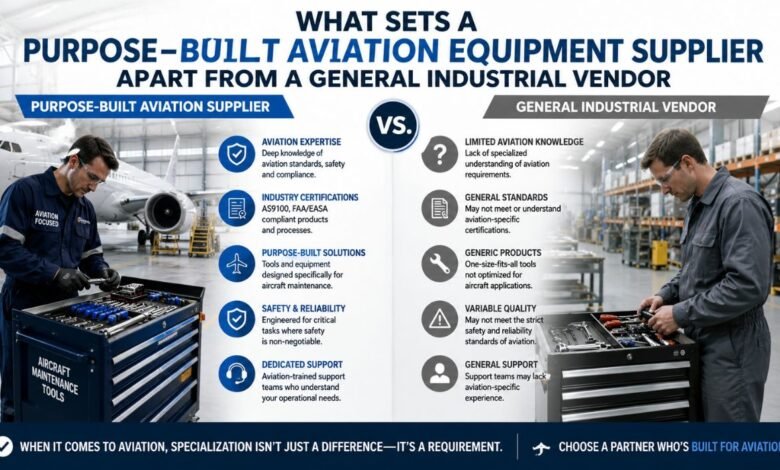
The choice of supplier becomes far more critical than you might expect when sourcing equipment for aircraft maintenance, servicing, or ground operations. General industrial vendors might stock products that look similar at first glance, but purpose-built aviation equipment suppliers deliver something entirely different, specialized knowledge that comes from years in the industry, deep expertise in regulatory compliance, and design considerations shaped specifically by aviation’s unique demands. These distinctions affect everything from daily safety to long-term operational success. Making an informed choice protects both your financial investment and the valuable aircraft entrusted to your care.
Specialized Engineering and Design Standards
Aviation equipment suppliers engineer their products with one focus: the distinct challenges of aircraft servicing environments. Their engineering teams don’t just understand generic support needs, they grasp the nuances of weight distribution across different airframe types, the clearance requirements that vary between aircraft models, and the precise stress points that emerge when supporting everything from light singles to commercial jets. You’ll notice they account for variables that general industrial designers never consider: hydraulic system pressures specific to aviation jacks, load-bearing requirements that change dramatically with aircraft size, and the exacting positioning needed to access maintenance areas without risking costly damage. General industrial vendors? They’re designing for warehouses, manufacturing floors, and construction sites, broader applications that simply don’t address aviation’s demanding tolerances.
The materials these aviation-focused suppliers select tell another story entirely. They choose components that withstand corrosion from jet fuel exposure, resist degradation from hydraulic fluid contact, and endure the harsh weather conditions that define airport ramps and hangars. You’re getting design features that matter in real-world aviation operations: non-marring contact surfaces that won’t scratch expensive aircraft skin, height adjustment mechanisms calibrated to millimeter precision, and stability systems specifically engineered for the curves and contours of aircraft fuselages. These aren’t adaptations of industrial equipment, they’re purpose-built solutions that reflect genuine understanding of how aircraft maintenance actually happens.
Regulatory Compliance and Certification Expertise
Purchasing from a purpose-built aviation equipment supplier means you’re buying products designed with regulatory requirements baked into every specification. These suppliers don’t treat Federal Aviation Administration standards as an afterthought, they design around them from the initial concept stage. They maintain current expertise on Occupational Safety and Health Administration requirements that specifically govern aviation ground support equipment, and they track international aviation safety guidelines that affect maintenance operations worldwide. The products arrive with comprehensive documentation, testing certifications, and compliance records that satisfy auditors from regulatory agencies and insurance providers alike.
Compare that to general industrial vendors offering equipment that meets basic safety standards for factory floors or construction sites. Their products might be perfectly adequate for industrial applications, but they lack the specific certifications and rigorous testing protocols that aviation environments demand. Aviation equipment suppliers understand something crucial: traceability matters immensely in this industry. They maintain detailed records documenting materials sources, manufacturing processes, and quality control measures that align with aviation industry standards.
Industry-Specific Technical Support and Training
The technical support experience differs dramatically between aviation equipment suppliers and general industrial vendors. When you contact an aviation-focused supplier, their representatives immediately understand your operational context, they know aircraft models by designation, they’re familiar with maintenance procedures you’re describing, and they grasp the time pressures inherent in aviation maintenance scheduling. They’ll guide you toward proper equipment selection based on specific aircraft types you’re servicing, the particular maintenance tasks you’re performing, and your facility’s unique configuration. A general industrial vendor’s support team? They’re helpful folks, certainly, but they’re answering questions about forklifts, warehouse equipment, and construction scaffolding alongside your aviation inquiry.
You also gain access to training resources developed specifically for aviation applications. These materials help your team use equipment safely and effectively according to both manufacturer recommendations and established aviation best practices, not generic industrial guidelines that don’t quite fit your situation. Many aviation equipment suppliers maintain ongoing relationships with major aircraft manufacturers, keeping them informed about design changes, new aircraft models entering service, and evolving maintenance requirements that might affect equipment selection or usage. This industry connectivity provides proactive value you won’t find elsewhere. Proper ground support equipment and trained personnel represent critical factors in preventing aircraft damage during maintenance operations. When urgent problems arise, and in aviation, urgency comes with the territory, aviation-focused suppliers understand that aircraft downtime costs money every hour, and they can provide expedited support that minimizes operational disruptions.
Quality Control and Manufacturing Precision
Purpose-built aviation equipment suppliers implement quality control processes that go well beyond what you’ll typically encounter in general industrial manufacturing. Their facilities often feature controlled environments that minimize contamination, precision tooling calibrated to aerospace standards, and inspection protocols designed to ensure every single unit meets exacting specifications. Quality assurance teams conduct testing that mirrors real, world aviation applications, load testing that exceeds rated capacities by significant margins, stability assessments under various positioning scenarios you’ll encounter in actual use, and durability testing that accounts for the repetitive use patterns common in busy aviation maintenance facilities.
When performing maintenance tasks that require reliable aircraft support, professionals who need to position aircraft safely and precisely rely on quality tronair tripod jacks designed specifically for aviation applications. General industrial vendors conduct quality control that’s perfectly appropriate for their broader market, but they lack the aviation-specific testing protocols that identify potential failures before equipment ever reaches an aircraft. The materials sourcing practices tell another story about commitment to reliability. Aviation equipment suppliers often specify aerospace-grade materials throughout their products, or they source components that meet stringent quality standards enforced throughout the supply chain, standards that general industrial procurement departments might find excessive for their applications.
The benefits flow directly to your operations. You’re working with equipment manufactured to tighter tolerances, welded according to more rigorous standards, and finished with processes that enhance both durability and safety in aviation-specific environments. This manufacturing precision translates to equipment that performs consistently shift after shift, maintains calibration over extended periods, and demonstrates the reliability that’s absolutely essential when you’re working around aircraft assets worth millions of dollars.
Long-Term Value and Total Cost of Ownership
The true cost picture becomes clear only when you evaluate aviation ground support equipment over its entire service life. Purpose-built suppliers often deliver superior value despite higher initial purchase prices, sometimes substantially higher prices. How? Their products demonstrate longer service lives thanks to aviation-grade materials and construction methods engineered for the demanding conditions of aircraft maintenance environments. You’ll experience fewer equipment failures, reduced maintenance requirements, and lower replacement frequencies that significantly impact total cost of ownership over the years.
Specialized design features incorporated by aviation equipment suppliers frequently enhance operational efficiency in ways that are hard to quantify initially but become obvious over time. Aircraft positioning happens faster, maintenance tasks get completed more efficiently, and equipment repositioning between operations takes less time. These efficiency gains compound over thousands of uses throughout a year, creating labor cost savings that can dwarf any initial price differences between aviation-specific and general industrial alternatives. You’re also avoiding hidden costs that never appear on the initial invoice, costs associated with equipment failures, aircraft damage incidents, maintenance delays that cascade through your schedule, safety incidents that trigger investigations, and the administrative burden of insurance claims and incident reports.
Purpose-built aviation suppliers typically offer better availability of replacement parts years after purchase, longer warranty periods that reflect confidence in their products, and trade-in or upgrade programs that protect your investment as operational needs evolve or equipment standards advance within the aviation industry. These aren’t small considerations, they’re fundamental aspects of the supplier relationship that affect your operations for years.
Conclusion
Choosing a purpose-built aviation equipment supplier over a general industrial vendor represents a strategic decision with implications for safety, efficiency, regulatory compliance, and long-term operational costs. You’re gaining specialized engineering expertise, regulatory knowledge that comes from focusing on aviation, industry-specific support that speaks your language, and quality standards designed specifically for aviation applications rather than adapted from other industries. General industrial equipment might look adequate for basic functions, until compliance gaps emerge, efficiency limitations become apparent, or hidden risks materialize in ways you didn’t anticipate. Partnering with suppliers who genuinely understand your unique challenges and design solutions specifically for aviation environments protects your aircraft assets, enhances operational efficiency, and demonstrates the commitment to safety and quality that defines professional aviation operations.