William Hurt was more than just a movie star—he was a rare kind of actor whose performances brought quiet intensity, intelligence, and emotional depth to every role he touched. From his breakthrough in the early 1980s to his iconic Oscar win and his lasting influence in both indie cinema and blockbuster franchises like the Marvel Cinematic Universe, Hurt’s career remains a blueprint for how to evolve with grace in Hollywood. He wasn’t just celebrated for his talent—he was respected for his thoughtfulness, his craft, and his refusal to follow the usual rules of celebrity. Even after his passing in 2022, his legacy continues to inspire actors and audiences alike.
Quick Bio Information
Full Name: William McChord Hurt
Birthdate: March 20, 1950
Birthplace: Washington, D.C., USA
Date of Death: March 13, 2022
Age at Death: 71
Occupation: Actor
Notable Films: Kiss of the Spider Woman, Body Heat, The Big Chill, Broadcast News, A History of Violence
Awards: Academy Award for Best Actor, 4 total Oscar nominations
Education: Tufts University, Juilliard School
Family: Four children; married twice
Marvel Role: General Thaddeus “Thunderbolt” Ross in the MCU
Early Life And Family Background
William Hurt was born on March 20, 1950, in Washington, D.C., into a family closely tied to American political and media institutions. His mother, Claire Isabel, worked at Time Inc., and his father, Alfred Hurt, was a diplomat and government official who served with the United States Agency for International Development and the State Department. When William was just six years old, his parents divorced, and his mother later married Henry Luce III—the son of the founder of Time Magazine. This upbringing, surrounded by intellectual and political discourse, helped shape Hurt into the contemplative performer he would become.
Education And Training At Juilliard
Before pursuing acting, Hurt studied theology at Tufts University, where his deep philosophical interests started to take shape. But it was at New York’s famed Juilliard School—where he trained alongside future greats like Christopher Reeve and Robin Williams—that he truly found his calling. Juilliard’s rigorous conservatory training instilled in him a discipline and artistry that carried through every stage of his acting career. His background in theology may have been unconventional for an actor, but it contributed to the intense internal life he brought to his characters on screen.
Breakthrough Roles In The 1980s
William Hurt’s film debut came in 1980 with the science-fiction thriller Altered States, where he played a tormented scientist exploring the limits of consciousness. But it was his performance in Body Heat (1981), opposite Kathleen Turner, that turned him into a household name. The steamy neo-noir film was a box-office hit and showcased Hurt’s charisma and complexity. He followed this success with powerful roles in Gorky Park (1983) and The Big Chill (1983), the latter becoming a cultural touchstone for a generation of Baby Boomers. These early roles marked Hurt as a new kind of leading man—introspective, intelligent, and deeply human.
Oscar-Winning Performance And Golden Years
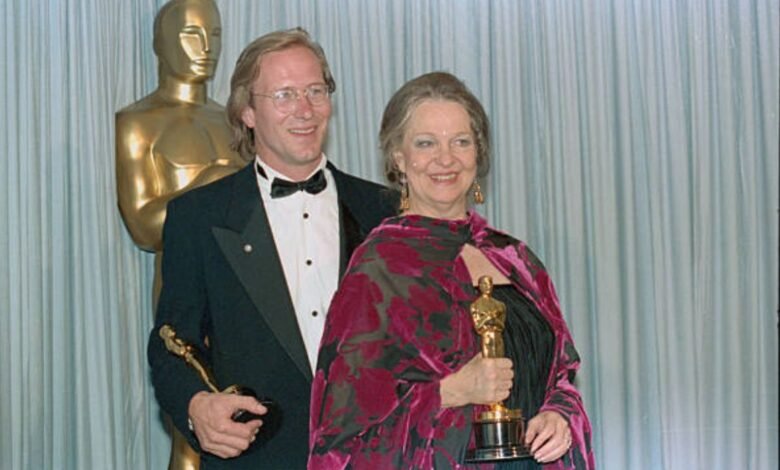
From 1985 to 1987, Hurt enjoyed one of the most remarkable streaks in Academy Awards history. He earned three consecutive Best Actor nominations—winning in 1986 for his role as a gentle, imaginative gay prisoner in Kiss of the Spider Woman. His performance was widely praised for its vulnerability and theatricality, setting a new standard for portrayals of LGBTQ+ characters in mainstream film. He followed this with nominations for Children of a Lesser God (1986), where he played a speech teacher in love with a deaf woman, and Broadcast News (1987), where he brought charm and cluelessness to a network anchor. These roles displayed his incredible range and confirmed his place at the top of his profession.
Personal Struggles And Private Battles
Despite his professional acclaim, Hurt faced personal challenges throughout his life. He struggled with addiction in the late 1980s and openly spoke about the emotional toll fame had taken on him. In interviews, he described himself as a private man who never fully embraced the attention that came with celebrity. A long and troubled relationship with co-star Marlee Matlin, who later accused him of abuse in her memoir, added controversy to his personal narrative. Hurt issued a statement expressing remorse and emphasizing that both he and Matlin had worked toward healing. His willingness to reflect on his flaws added a human dimension to his otherwise mythic reputation.
Reinventing Himself As A Character Actor
As Hurt aged out of typical leading-man roles, he found new creative life in supporting performances. He earned critical praise for The Doctor (1991), where he played an arrogant surgeon confronting his mortality. He took on more complex and offbeat roles in films like Wim Wenders’ Until the End of the World (1991) and Jane Eyre (1996). While these films were not always box office hits, they allowed Hurt to showcase his remarkable depth and emotional honesty. This shift in focus revealed a performer more concerned with storytelling than stardom.
Resurgence In The 2000s
William Hurt’s career saw a notable resurgence in the early 2000s. His chilling performance in A History of Violence (2005) earned him an Academy Award nomination for Best Supporting Actor, despite being on screen for less than 10 minutes. Critics praised the intensity and magnetism he brought to the role of a sinister mob boss. He also appeared in Into the Wild (2007), The Good Shepherd (2006), and the sci-fi epic A.I. Artificial Intelligence (2001), each time delivering nuanced performances that left a lasting impression. This era reaffirmed Hurt’s reputation as one of the most quietly powerful actors of his generation.
Becoming A Marvel Fan Favorite
Younger audiences came to know William Hurt through his role as General Thaddeus “Thunderbolt” Ross in the Marvel Cinematic Universe. He first appeared in The Incredible Hulk (2008) and went on to reprise the role in Captain America: Civil War, Avengers: Infinity War, Avengers: Endgame, and Black Widow. As General Ross, he brought gravitas and emotional complexity to a character often caught between duty and moral ambiguity. His presence added a layer of authenticity to the superhero franchise, showing that even in blockbuster films, Hurt remained a serious actor with purpose and precision.
Awards, Recognition, And Artistic Reputation
Throughout his career, William Hurt was widely admired by critics and peers alike. He won one Academy Award and was nominated for three more. He also received Emmy nominations for his television work in the legal drama Damages and HBO’s Too Big to Fail, where he portrayed Treasury Secretary Henry Paulson. Reviewers like Roger Ebert often highlighted Hurt’s ability to portray deeply internal characters, praising his restraint and subtlety. Unlike many stars of his era, Hurt avoided flashy performances, preferring to let his characters speak through quiet power. This artistic integrity earned him respect across the film industry.
Family Life, Relationships, And Personal Legacy
William Hurt was married twice—first to actress Mary Beth Hurt from 1971 to 1982, and then to Heidi Henderson from 1989 to 1991. He had four children and remained a devoted father throughout his life. While he was often guarded about his personal affairs, those close to him described him as thoughtful, passionate, and deeply committed to his craft. In later years, Hurt preferred a more private life, appearing in select projects while spending time with his family. His personal legacy, like his screen presence, was understated but deeply meaningful.
Final Years And Reflective Goodbye
In the final years of his life, William Hurt continued to act occasionally while maintaining a low public profile. On March 13, 2022, he passed away peacefully of natural causes, surrounded by family, just one week before his 72nd birthday. The announcement was made by his son, Will Hurt, and confirmed by longtime friend Gerry Byrne. The news prompted an outpouring of tributes from Hollywood and beyond, celebrating a man who left an indelible mark on cinema. His final performances, especially in Marvel films, allowed him to say goodbye to a new generation of fans while leaving behind a legacy that transcends decades.
Conclusion: A Life Of Depth, Artistry, And Enduring Influence
William Hurt was never the loudest actor in the room—but that was precisely what made him great. Whether playing a gentle soul in Kiss of the Spider Woman or a hardened general in the Marvel universe, he always brought something unique: an emotional intelligence that made every performance feel real. His commitment to his craft, his unwillingness to chase fame, and his ability to evolve with time make his story one of the most fascinating in Hollywood history. William Hurt may be gone, but his work continues to speak volumes—and will for years to come.
FAQs About William Hurt
What Did William Hurt Win An Oscar For?
He won the Academy Award for Best Actor in 1986 for his role in Kiss of the Spider Woman, where he played a gay window dresser imprisoned in South America.
How Many Times Was William Hurt Nominated For An Oscar?
William Hurt was nominated four times: three for Best Actor and one for Best Supporting Actor.
Was William Hurt In The Marvel Cinematic Universe?
Yes, he played General Thaddeus “Thunderbolt” Ross in several MCU films, including The Incredible Hulk, Civil War, and Endgame.
What Were William Hurt’s Most Famous Movies?
Some of his most iconic films include Body Heat, The Big Chill, Children of a Lesser God, Broadcast News, and A History of Violence.
Did William Hurt Have Any Controversies?
Yes, his relationship with actress Marlee Matlin included allegations of abuse, which he later acknowledged and expressed remorse for in a public statement.
What Was William Hurt’s Acting Style Known For?
He was known for his emotional restraint, intellectual depth, and subtle character work that often revealed hidden vulnerabilities.
How Did William Hurt Die?
He died peacefully of natural causes on March 13, 2022, surrounded by his family. His death was announced by his son, Will Hurt.
People Also Read: Ali Larter: A Complete Look at Her Life and Career